

Currently Empty: ₹0.00
Online School
6 Proven Ways Building Independence in Children Online
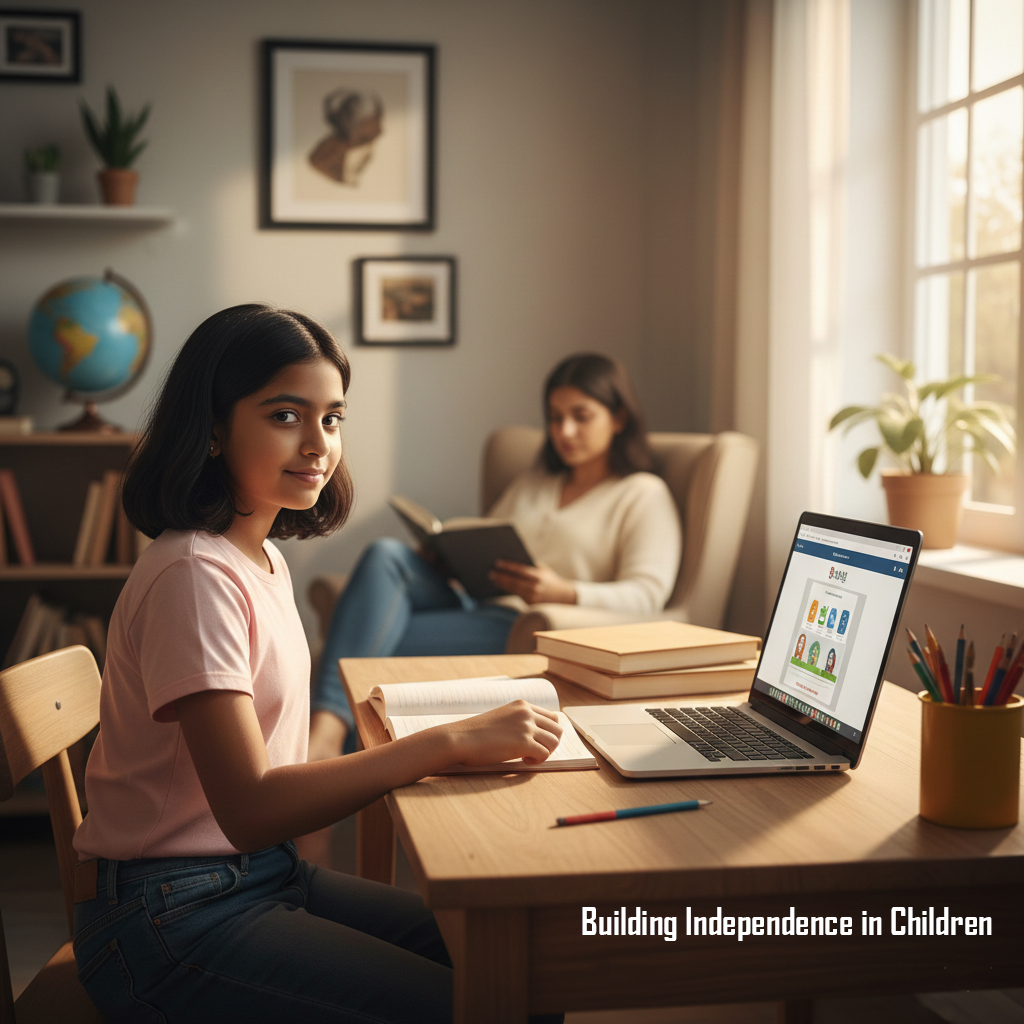
Why Building Independence in Children Matters More Today
In today’s rapidly changing world, children need more than academic knowledge to succeed. They need confidence, decision-making skills, and the ability to take responsibility for their actions. This is why building independence in children has become a key focus of modern education.
Online schooling, when designed thoughtfully, offers unique opportunities to nurture independence. Learning from home encourages children to manage their time, organize tasks, and take ownership of their learning journey.
What Does Independence Mean for Children?
Independence in children does not mean working alone without support. It means learning how to think critically, make choices, and handle challenges with guidance rather than dependence.
Independent learners are able to:
- Manage daily routines
- Take responsibility for assignments
- Ask for help when needed
- Reflect on their own progress
These skills prepare children for both academic success and real-world responsibilities.
How Online Schooling Supports Independent Learning
Online schools naturally place more responsibility on students. Without constant physical supervision, children learn to regulate their behavior and learning habits.
Key aspects of online schooling that support independence include:
- Flexible learning schedules
- Self-paced lessons
- Digital tools for tracking progress
When supported by teachers and parents, these elements encourage children to become confident learners.
- Encouraging Decision-Making Skills
Online learning environments often give children choices, such as when to complete tasks or how to approach projects. These small decisions play a big role in building independence in children.
By making choices, students learn:
- Accountability for outcomes
- Problem-solving skills
- Confidence in their abilities
These experiences help children trust their judgment over time.
- Developing Time Management and Organization
Managing time effectively is a crucial life skill. Online schooling helps children practice planning and organization in a practical way.
Children learn to:
- Follow schedules
- Meet deadlines
- Balance academic and personal time
These habits strengthen self-discipline and reduce dependency on constant reminders.
- Promoting Self-Motivation and Ownership
Without a traditional classroom setting, online learners must stay motivated from within. Teachers guide students, but learners must take initiative.
Building independence in children involves:
- Setting personal learning goals
- Tracking progress
- Reflecting on achievements and challenges
This sense of ownership leads to deeper engagement and confidence.
- Supporting Emotional Independence
Independence is not just academic. Emotional independence helps children handle setbacks, frustration, and success constructively.
Online schools can support this by:
- Encouraging reflection and self-expression
- Teaching coping strategies
- Providing consistent emotional support
When children learn to manage emotions, they become more resilient learners.
- Strengthening Problem-Solving Abilities
Online learning environments often require children to troubleshoot technical issues or understand instructions independently. These situations build problem-solving skills naturally.
Children learn to:
- Think critically
- Explore solutions
- Seek help appropriately
These experiences contribute significantly to independent thinking.
Challenges in Building Independence Online
While online schooling offers many benefits, it also presents challenges. Some children may struggle with motivation or feel overwhelmed by responsibility.
Common challenges include:
- Lack of structure at home
- Overdependence on parents
- Difficulty staying focused
Addressing these challenges requires collaboration between teachers, parents, and schools.
How Online Schools Can Balance Support and Independence
Effective online schools strike a balance between guidance and freedom. This includes:
- Clear expectations
- Regular feedback
- Structured yet flexible learning plans
When children feel supported rather than controlled, independence grows naturally.
How Vikalp India Helps Build Independence in Children
Vikalp India is committed to nurturing confident and independent learners through its online schooling model. By combining activity-based learning with structured guidance, Vikalp India empowers children to take ownership of their education.
With curriculum-aligned programs for K–12 learners, hands-on learning kits, and personalized support, Vikalp India creates an environment where independence is encouraged without compromising academic quality. This approach helps children develop skills that prepare them for lifelong success in an online school setting.