

Currently Empty: ₹0.00
Early Education
Moral Values for Children 7 Best Ultimate Guide
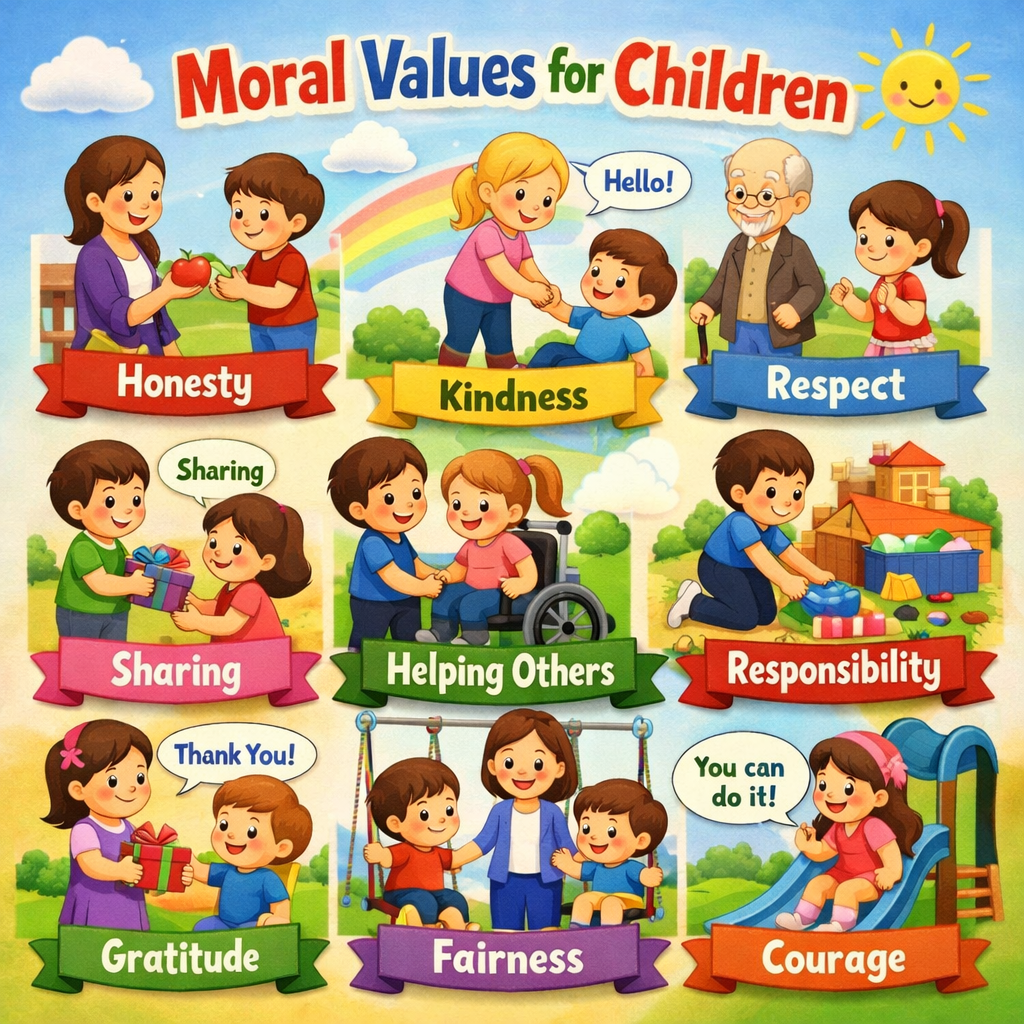
Moral values for children in early education
Moral education is a foundation of holistic learning in childhood. Moral values for children help shape behavior, emotional balance, and social responsibility from the earliest years. In India, education has always emphasized values along with academics, making moral learning a core part of childhood development.
Children begin forming habits and attitudes at a young age. When values are introduced early, children learn to respect others, follow rules, and act with empathy in everyday situations.
Why values are important for growing minds
Children today are exposed to multiple influences through media, peers, and digital platforms. Moral values for children act as a guiding framework that helps them make thoughtful choices. Values provide clarity during confusion and help children understand consequences.
Ethical learning supports emotional development. Children who understand fairness and kindness show better peer relationships and emotional stability. These skills support both academic and personal growth.
Core moral principles every child should learn
Moral learning does not need complex lessons. Simple daily practices help children absorb essential principles.
~ Honesty builds trust and integrity
~ Respect encourages acceptance of differences
~ Responsibility develops accountability
~ Kindness strengthens empathy
~ Patience improves emotional control
When moral values for children are practiced daily, they become natural behavior rather than forced discipline.
Role of parents in value formation
Parents are a child’s first teachers. Children closely observe adult behavior and imitate actions. Practicing fairness, keeping promises, and showing gratitude create powerful learning moments at home.
Storytelling is an effective tool. Indian folk stories, moral tales, and real life examples help children connect actions with outcomes in a meaningful way.
How schools reinforce moral learning
Schools provide social environments where children practice values with peers. Moral values for children are reinforced through group activities, classroom discussions, and cooperative tasks. Teachers play a key role by modeling respectful and ethical behavior.
Alternative learning approaches often integrate value based education into daily routines. This helps children understand morality as part of life, not just rules to follow.
Moral values for children in modern classrooms
Education systems today must balance academic achievement with character development. Moral values for children support mental well being, reduce behavioral challenges, and improve classroom harmony.
Children who develop strong values show confidence, self awareness, and leadership potential. These traits help them adapt to changing environments and social expectations.
Long term impact of moral education
Moral values for children influence decision making throughout life. Children raised with ethical awareness grow into adults who contribute positively to society and respect diversity.
Value based learning creates individuals who are emotionally strong, socially responsible, and capable of independent thinking. Moral education is not an addition to learning, it is the foundation of meaningful education