

Currently Empty: ₹0.00
Online School
8 Essential Rules in Student Code of Conduct
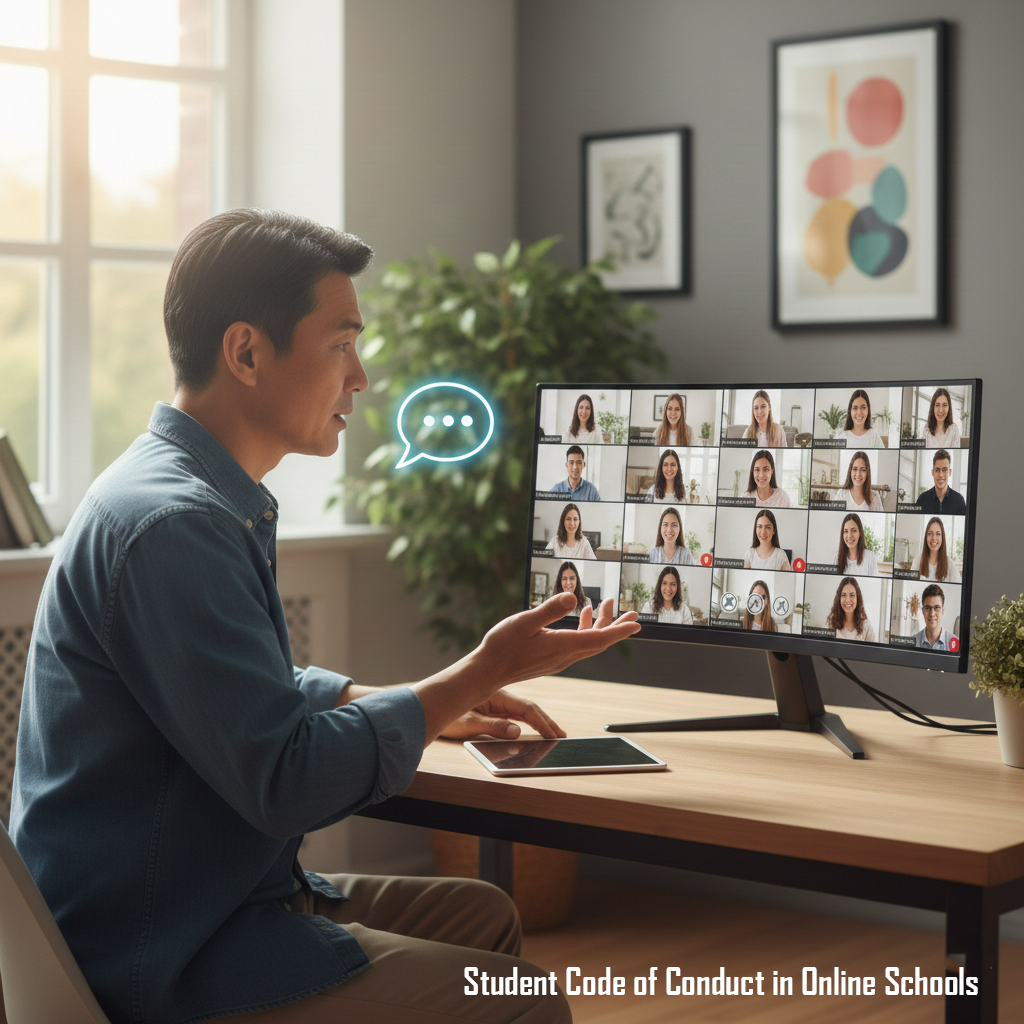
Why a Student Code of Conduct Is Crucial in Online Schools
Online schooling has transformed how students learn, interact, and grow. While it offers flexibility and accessibility, it also requires strong guidelines to ensure a safe and respectful learning environment. This is where a well-defined student code of conduct in online schools becomes essential.
Unlike traditional classrooms, online schools operate in digital spaces where behavior is shaped by screen interactions, virtual communication, and independent learning. Clear conduct guidelines help students understand expectations and maintain discipline even outside a physical classroom.
What Is a Student Code of Conduct in an Online School?
A student code of conduct outlines the behavioral expectations students must follow while participating in online learning. It serves as a framework for respectful interaction, academic integrity, and responsible digital citizenship.
In online schools, this code typically addresses:
- Virtual classroom behavior
- Communication etiquette
- Academic honesty
- Responsible use of technology
When students clearly understand these rules, learning becomes smoother and more effective.
- Promoting Respectful Online Communication
Digital classrooms rely heavily on communication tools such as video calls, chats, and discussion forums. Without clear guidelines, misunderstandings or inappropriate behavior can occur.
A strong code of conduct ensures students:
- Use respectful language
- Listen actively to others
- Avoid disruptive behavior in chats
These expectations help create a positive and inclusive virtual learning space.
- Encouraging Responsible Use of Technology
Online learning requires regular use of devices and internet platforms. A student code of conduct in online schools teaches learners how to use technology responsibly.
This includes:
- Logging in with proper credentials
- Avoiding misuse of digital tools
- Respecting online privacy and security
Such practices prepare students for responsible digital participation beyond school.
- Supporting Academic Integrity
Academic honesty is a key concern in online education. Clear conduct guidelines help students understand what is acceptable and what is not.
A well-defined code promotes:
- Original work submission
- Ethical use of online resources
- Honest participation in assessments
By setting these standards early, schools build trust and accountability among students.
- Creating a Safe and Inclusive Learning Environment
Online schools often bring together students from diverse backgrounds. A student code of conduct ensures that every learner feels safe and respected.
Guidelines addressing:
- Bullying and harassment
- Discrimination or offensive behavior
- Mutual respect
help foster an inclusive atmosphere where students can focus on learning without fear or discomfort.
- Encouraging Self-Discipline and Accountability
Online learning requires a higher level of self-discipline compared to traditional classrooms. Conduct guidelines help students take responsibility for their actions.
When expectations are clear, students learn to:
- Manage their time effectively
- Participate actively in sessions
- Take ownership of their behavior
This accountability strengthens both academic and personal growth.
- Helping Teachers Manage Virtual Classrooms Effectively
Teachers in online schools face unique classroom management challenges. A clearly communicated student code of conduct provides a consistent reference point for handling issues.
It allows teachers to:
- Address concerns fairly
- Maintain order without constant reminders
- Focus more on teaching and engagement
This clarity benefits both educators and learners.
Challenges in Enforcing Conduct in Online Schools
Despite clear guidelines, enforcing behavior standards online can be challenging. Limited supervision, technical issues, and varying home environments may affect student conduct.
Addressing these challenges requires:
- Consistent reinforcement of rules
- Open communication with parents
- Support systems for students
A collaborative approach ensures long-term effectiveness.
How Online Schools Can Strengthen Student Conduct Policies
Successful online schools regularly review and adapt their conduct policies. This includes:
- Clear orientation sessions for students
- Age-appropriate guidelines
- Continuous feedback and improvement
When students understand the purpose behind the rules, they are more likely to follow them willingly.
How Vikalp India Supports Positive Student Conduct
Vikalp India emphasizes structured learning and responsible digital behavior as part of its online schooling model. By combining activity-based learning with clear expectations, Vikalp India helps students develop discipline, respect, and accountability.
With curriculum-aligned programs for K–12 learners, hands-on kits, and supportive teacher guidance, Vikalp India creates an environment where students not only follow rules but also understand their importance. This approach prepares learners to thrive in online schools and beyond.