

Currently Empty: ₹0.00
Information
7 Powerful Ways Social Responsibility Shapes Students Online
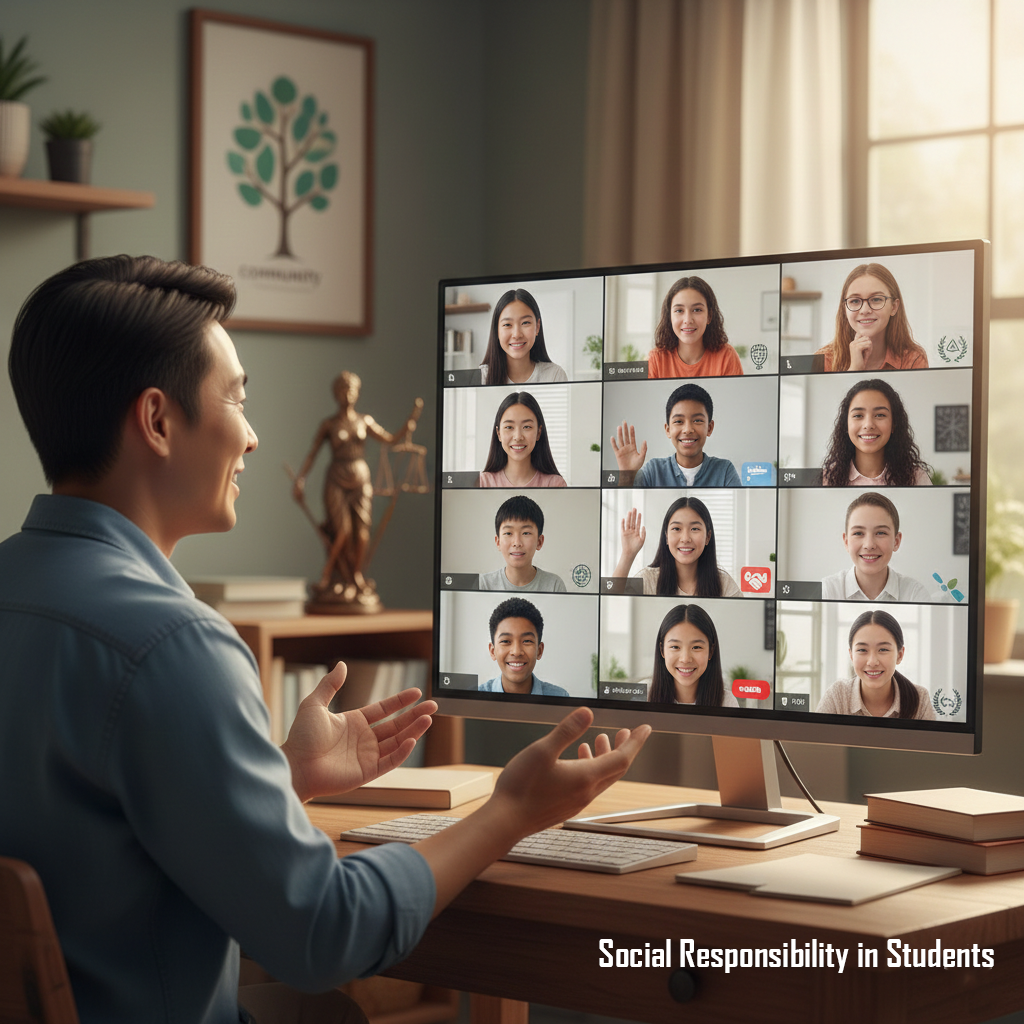
Understanding Social Responsibility in the Age of Online Schooling
Education is not only about academic achievement. It is also about shaping responsible, ethical, and compassionate individuals. In today’s digital learning environment, the importance of social responsibility in students has grown significantly.
Online schools connect learners from diverse backgrounds and cultures, making it essential for students to understand their role within a broader community. Social responsibility helps students become aware of how their actions affect others, both online and offline.
What Does Social Responsibility Mean for Students?
Social responsibility refers to a student’s ability to act with empathy, respect, and accountability toward others and society. In an online school setting, this includes responsible digital behavior, ethical decision-making, and active participation in collaborative learning.
Students who develop social responsibility learn to:
- Respect different opinions
- Contribute positively to group activities
- Understand their role in creating a healthy learning environment
These values prepare students for life beyond the classroom.
Why Social Responsibility Is Important in Online Schools
Online learning offers independence, but it also demands maturity. Without physical supervision, students must make conscious choices about behavior, communication, and participation.
Social responsibility in students ensures:
- Respectful online interactions
- Honest academic practices
- Consideration for peers and teachers
This sense of responsibility strengthens the overall quality of online education.
- Encouraging Respectful Digital Citizenship
Online schools rely heavily on digital communication. Teaching social responsibility helps students understand how to behave respectfully in virtual spaces.
Responsible digital citizens:
- Communicate politely in chats and discussions
- Avoid harmful or offensive language
- Respect privacy and personal boundaries
These habits create safer and more inclusive online classrooms.
- Building Empathy Through Virtual Collaboration
Online learning often involves group projects, discussions, and peer feedback. Social responsibility teaches students to listen, understand, and support others.
Through collaboration, students learn to:
- Appreciate diverse perspectives
- Work cooperatively toward shared goals
- Offer constructive feedback
These skills foster empathy and teamwork, even in digital environments.
- Promoting Accountability and Ethical Behavior
In online schools, students have greater control over their learning schedules and assessments. Social responsibility encourages them to act ethically and take ownership of their actions.
This includes:
- Submitting original work
- Managing time effectively
- Participating honestly in evaluations
Accountability strengthens trust between students and educators.
- Developing Awareness of Community and Society
Education plays a vital role in helping students understand their connection to society. Social responsibility in students nurtures awareness of social issues and community needs.
Online schools can support this by:
- Integrating real-world topics into lessons
- Encouraging discussions on social values
- Promoting community-oriented activities
Such experiences help students see learning as a tool for positive change.
- Strengthening Emotional and Social Skills
Social responsibility is closely linked to emotional intelligence. Students who understand their impact on others develop better emotional awareness and self-control.
These skills help students:
- Manage conflicts calmly
- Express emotions respectfully
- Build healthy relationships
In online classrooms, strong social skills improve communication and engagement.
Challenges in Teaching Social Responsibility Online
Teaching social responsibility in an online setting is not without challenges. Limited face-to-face interaction and varying home environments can affect student behavior.
Common challenges include:
- Reduced social cues
- Feelings of isolation
- Miscommunication in digital spaces
Overcoming these challenges requires thoughtful teaching strategies and ongoing support.
How Online Schools Can Foster Social Responsibility
Effective online schools intentionally integrate social responsibility into their learning models. This can be achieved through:
- Collaborative activities
- Guided discussions on ethics and values
- Clear expectations for behavior
When social responsibility is part of daily learning, students naturally adopt these values.
How Vikalp India Encourages Social Responsibility in Students
Vikalp India places strong emphasis on holistic education that goes beyond academics. Through activity-based learning, collaborative tasks, and guided interactions, Vikalp India helps students understand the importance of responsibility, empathy, and ethical behavior.
With curriculum-aligned programs for K–12 learners, hands-on learning kits, and a supportive online environment, Vikalp India nurtures socially responsible students who are prepared to contribute positively to society while thriving in an online school setting.