

Currently Empty: ₹0.00
Case Studies
7 Powerful Ways Creative Learning Methods for Children Build Confidence
Creative Learning Methods for Children
Creativity plays a vital role in how children process ideas and express understanding. When learning feels restrictive or repetitive, confidence often declines. Hiba’s journey demonstrates how creative learning methods for children can restore engagement and help learners communicate freely.
Hiba, a Grade 2 student, was naturally expressive and talkative. Over time, however, she became hesitant. Reading felt challenging, focus declined, and she grew self-conscious while sharing ideas. Traditional lesson formats did not allow her creativity to support her learning.
Why Creativity Matters in Early Learning
Children often think visually and emotionally before they think analytically. When learning environments ignore this, students may disengage or doubt their abilities. Creative learning methods for children allow students to express understanding in multiple ways, reducing pressure and increasing clarity. For Hiba, creativity was not a distraction. It was her strength.
Using Art and Visual Expression as Learning Tools
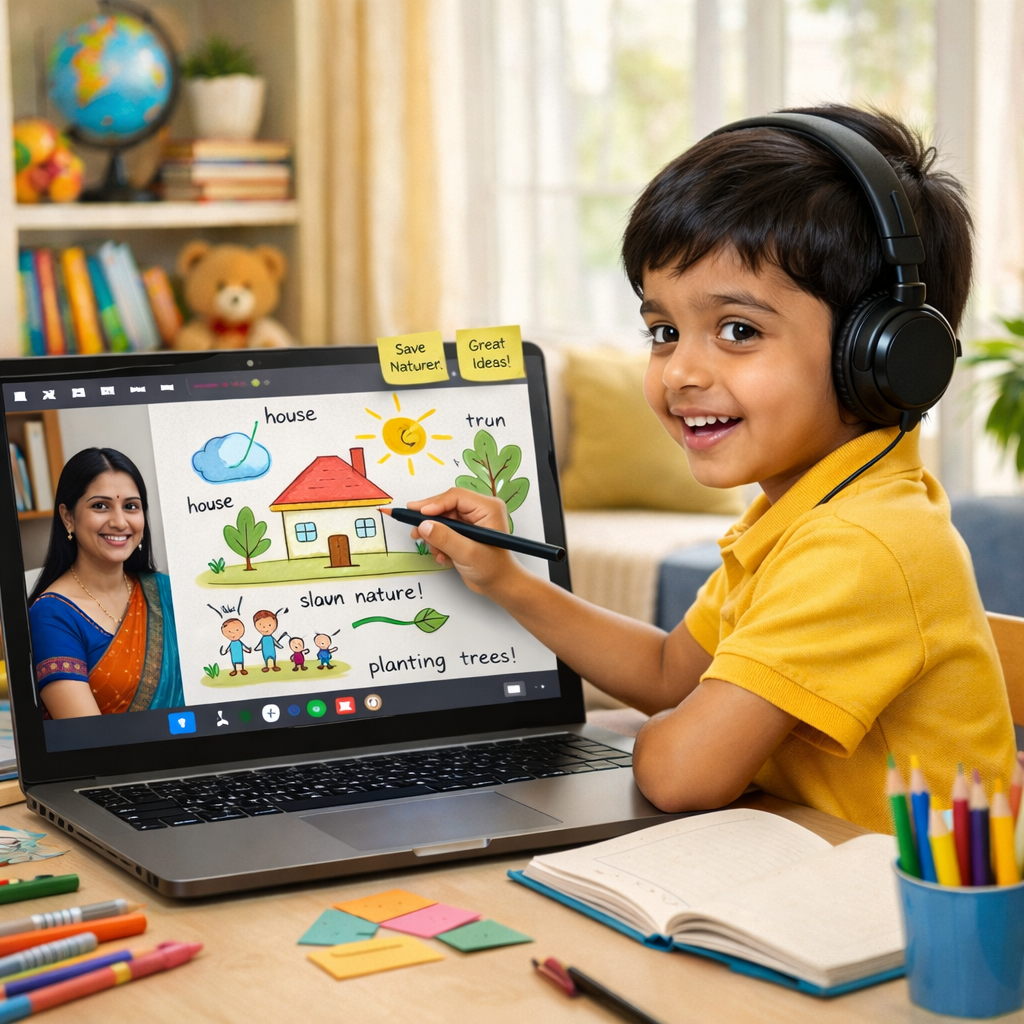
Hiba’s facilitator introduced drawing-based activities connected to vocabulary and storytelling. Grammar concepts were taught using visuals and real-life examples instead of repetition alone. Digital tools like whiteboards and design platforms allowed her to illustrate ideas before explaining them verbally. This reduced hesitation and increased confidence.
How Creativity Builds Communication Skills
When children are encouraged to explain their artwork or ideas, communication improves naturally. Hiba began speaking more clearly and confidently during class discussions. There was no fear of being wrong. Each response was valued as part of the learning process. Creative learning methods for children create safe spaces for expression, which is essential for communication growth.
Improved Focus Through Meaningful Engagement
As lessons became more engaging, Hiba’s focus improved. She stayed attentive because learning felt interesting and relevant. Creative tasks helped her remain involved even during challenging lessons, turning effort into enjoyment.
Emotional Support and Validation
Consistent encouragement played a key role in Hiba’s progress. Her facilitator validated effort and ideas rather than only correct answers. This emotional safety allowed Hiba to take risks, ask questions, and explore ideas freely.
Support Beyond the Classroom
At home, her parents encouraged her artistic interests and discussed her work. This reinforcement helped strengthen confidence beyond class time.
What Hiba’s Journey Teaches Us
Hiba’s growth highlights the importance of creativity in education. When children are allowed to express themselves, learning becomes meaningful and confidence grows naturally.
Hiba’s journey shows that learning flourishes in a supportive and creative environment. By combining academics with artistic expression, Vikalp helped her rediscover joy in learning and confidence in communication.
Vikalp India as a Positive Learning Alternative
Vikalp India integrates online schooling with thoughtfully designed learning experiences for K–12 students. Their curriculum-aligned approach includes hands-on kits and creative exploration that support both academic and emotional growth. By embracing creativity as a learning tool, Vikalp India helps children express themselves with confidence.
Learn more at https://vikalpindia.com