

Currently Empty: ₹0.00
Case Studies
6 Proven Ways Improving Attention Span in Children Becomes Easier
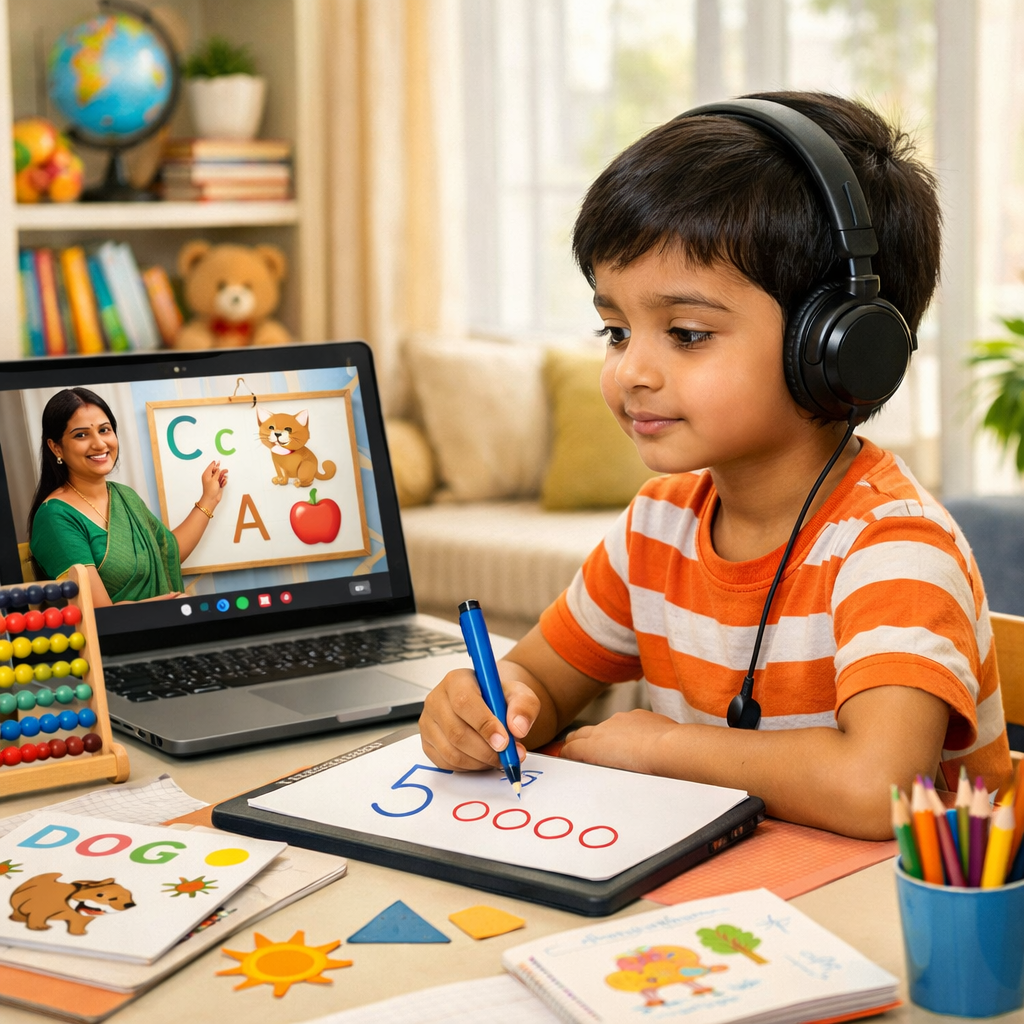
Improving Attention Span in Children
One of the most common concerns parents raise today is difficulty in improving attention span in children, especially in the early primary years. Many young learners are curious and eager, yet struggle to stay focused when lessons become abstract or lengthy. Kian’s learning journey offers a clear example of how attention challenges can be addressed without pressure or labeling.
Kian, a Grade 1 student, was enthusiastic and well-behaved in class. He wanted to participate and made genuine efforts to respond. However, when lessons involved theoretical explanations or large amounts of information, his focus would drift. This led to confusion, even though his interest in learning remained strong.
Understanding Why Attention Breaks Down in Young Children
In early childhood, attention is closely linked to engagement. Young learners are still developing the ability to process information verbally for long periods. When lessons rely heavily on listening alone, attention naturally drops.
In Kian’s case, the challenge was not motivation or discipline. It was the mismatch between how information was delivered and how his brain processed it.
Recognizing this distinction is critical when improving attention span in children. Without it, children are often misunderstood or unfairly pressured.
Shifting the Learning Experience to Match Developmental Needs
Once Kian’s facilitator identified the root cause, teaching strategies were adjusted. Lessons were redesigned to be shorter, more interactive, and easier to process.
Concepts were broken into small, manageable steps. Instead of explaining everything at once, learning unfolded gradually, allowing Kian to stay mentally present throughout the session.
This shift reduced cognitive overload and helped him stay attentive for longer periods.
Using Interaction to Sustain Focus
Interactive tools played a key role in keeping Kian engaged. Digital games encouraged turn-taking and active listening. Visual prompts helped him connect sounds, words, and meanings more clearly.
Movement was also integrated into lessons. For example, action-based responses helped him physically engage with concepts rather than only listening. This kept his mind alert and involved.
As a result, attention became a natural outcome of engagement, not something forced.
Confidence and Attention Grow Together
As Kian began to understand lessons more clearly, his confidence increased. He started responding independently instead of waiting for prompts.
This confidence further strengthened his focus. When children believe they can understand what is being taught, they are far more likely to stay attentive.
Improving attention span in children often depends on building this sense of clarity and success.
The Role of Encouragement and Consistency
Positive reinforcement played a crucial role in Kian’s progress. Every effort was acknowledged, reinforcing his willingness to stay involved.
Parents were also guided on simple follow-up activities at home. This consistency between classroom and home helped reinforce learning without creating pressure.
What Kian’s Journey Teaches Us
Kian’s experience shows that attention challenges do not require strict discipline or rigid instruction. They require understanding, flexibility, and age-appropriate strategies. When learning is designed around how children think and feel, focus improves naturally. As lessons became more interactive, Kian’s attention span improved noticeably. He began participating independently, responding confidently, and engaging actively throughout the class. His enthusiasm remained high, and he showed a stronger understanding of concepts taught.
Evidence of Growth
- Answered all classroom questions correctly during interactive sessions.
- Increased independent participation without prompts.
- Improved clarity and confidence while responding.
- Sustained focus throughout lessons
His academic performance and classroom behaviour both showed visible improvement.
Parent Involvement
Parents were informed about follow-up activities and encouraged to support revision at home.
This consistency between classroom and home further reinforced learning.
Conclusion
Kian’s journey demonstrates how multisensory and activity-based learning, a core part of
the Vikalp method, can transform attention challenges into opportunities for growth. With the
right strategies, learning becomes engaging, effective, and confidence-building.
Vikalp India as a Positive Learning Alternative
Vikalp India supports learners through online schooling that prioritizes emotional comfort and meaningful engagement. Their programs for K–12 students align with curriculum goals while offering hands-on kits and thoughtfully structured lessons.
By addressing attention challenges with care and understanding, Vikalp India helps children learn with focus and confidence.
Visit https://vikalpindia.com to learn more.